
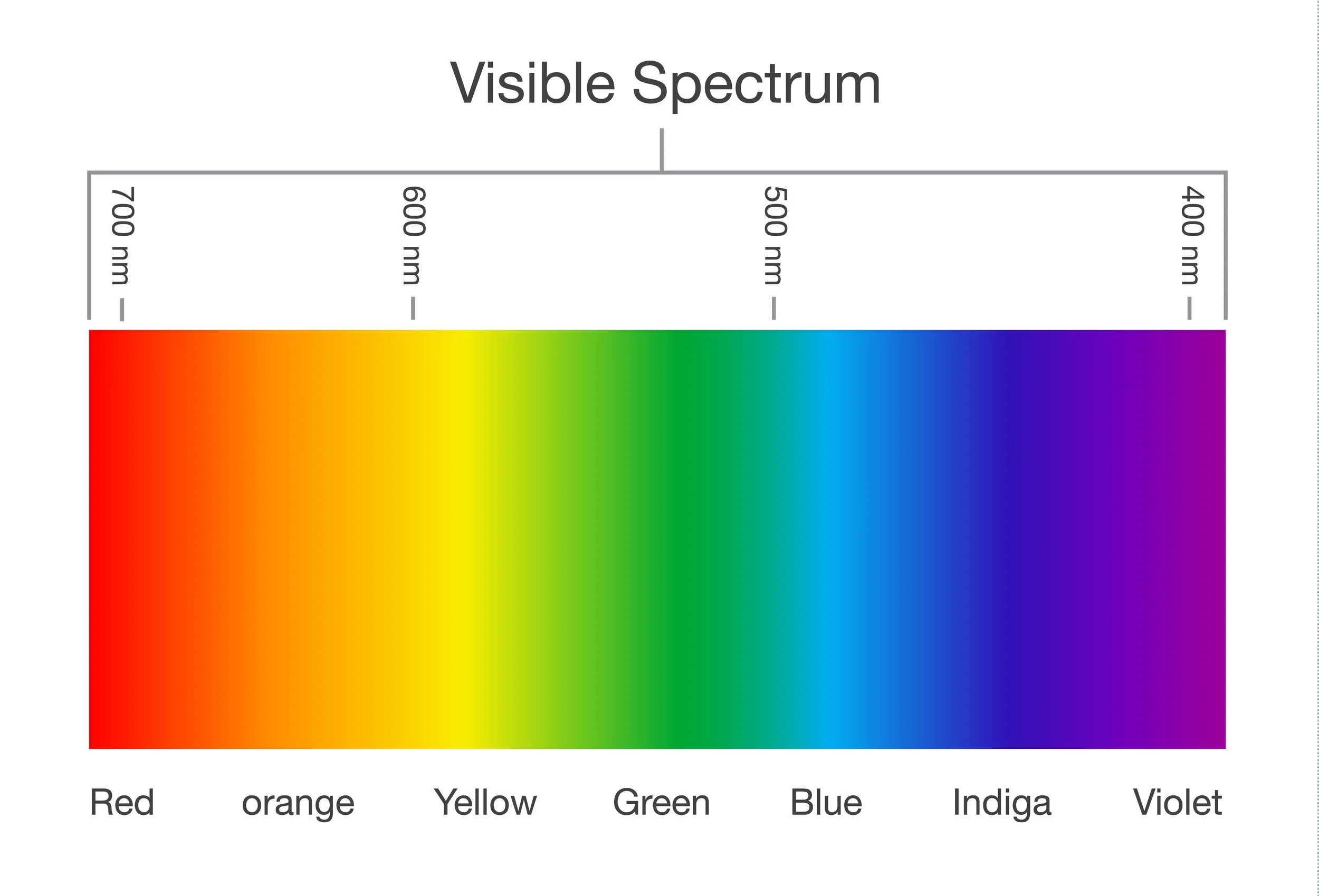
Color is one of the oldest languages available to human consciousness. Long before written symbols, color carried meaning — emotional, psychological, and spiritual. Across cultures, disciplines, and eras, color has functioned as a kind of frequency: a resonance that shapes how we perceive, interpret, and inhabit the world. While modern science describes color in terms of electromagnetic wavelengths, the human experience of color extends far beyond physics. It touches the psyche, the imagination, and the symbolic mind.
Psychologists, artists, philosophers, and spiritual practitioners have all attempted to articulate the deeper significance of color. Carl Jung viewed color as an expression of psychic energy — a manifestation of archetypal forces that move through the collective unconscious. For Jung, color was not merely aesthetic; it was a carrier of meaning, a symbolic field that revealed something about the inner life. In Man and His Symbols, he noted that color often appears in dreams and visions as a coded message from the unconscious, pointing toward emotional states or developmental thresholds.
Art theorists have taken a similarly expansive view. Wassily Kandinsky, in Concerning the Spiritual in Art, argued that color has an “inner sound,” a vibrational quality that affects the soul directly. He believed that each hue possesses a psychological temperature and a spiritual direction — blue moving inward toward depth, yellow radiating outward toward clarity, red pulsing with vitality and force. Josef Albers, though more empirical, still acknowledged that color perception is relational and emotional. His work demonstrated that color is never static; it shifts depending on context, adjacency, and the perceiver’s internal state.
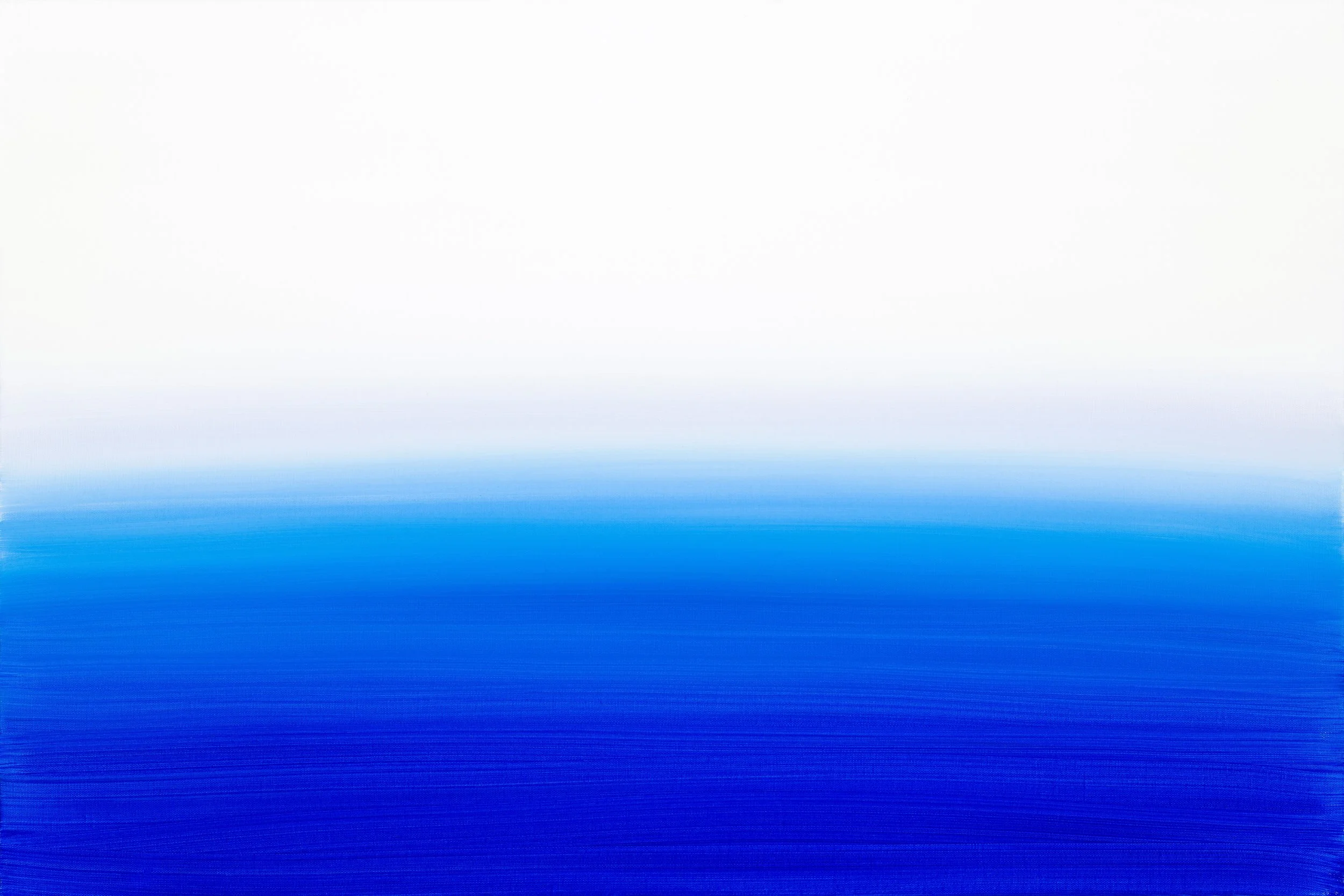
Jill Joy, Spiritual Horizon, oil on canvas, 24x36”
Phenomenologists add another layer, describing color as a lived experience — something that shapes how we orient ourselves in space and time. Maurice Merleau‑Ponty wrote that color is not an object but a “modulation of being,” a way the world discloses itself to us. In this view, color is not simply seen; it is felt, inhabited, and embodied.
Spiritual traditions, too, have long treated color as a map of consciousness. From the chakra system in Indian philosophy to the use of color in Tibetan thangka painting, from the symbolic palettes of Christian iconography to the color‑coded cosmologies of Indigenous cultures, color has been used to articulate states of awareness, emotional qualities, and metaphysical principles. While these systems differ, they share a belief that color is not arbitrary — it is expressive of deeper energetic patterns.
Across these disciplines, certain resonances recur. They are not rigid or universal, but they form a kind of cross‑cultural pattern language — a spectrum of psychological and spiritual “frequencies” that echo through human experience.

Jill Joy, Samskara, oil on canvas, 54x84” - Available
Red is consistently associated with vitality, will, and the raw force of existence. It is the color of blood, heat, and survival. Psychologically, red activates the sympathetic nervous system; it heightens alertness and signals urgency. Symbolically, it marks boundaries — the line between safety and danger, self and other. In spiritual traditions, red often represents grounding, embodiment, and the life‑force entering form. It is the frequency of action, assertion, and the primal drive to live.
Orange occupies the space of emergence — the threshold where instinct becomes creativity. It carries the warmth of red but with a lighter, more playful tone. Psychologically, orange evokes curiosity, appetite, and experimentation. It is associated with social engagement, spontaneity, and the pleasure of becoming. In spiritual frameworks, orange is linked to flow, sensuality, and the generative spark. It is the frequency of movement, desire, and creative risk.

Jill Joy, Yellow Emanation, oil on canvas, 18x24” Available
Yellow radiates clarity. It is the color of sunlight, illumination, and cognitive awakening. Psychologically, yellow is tied to discernment, optimism, and intellectual energy. It sharpens perception and signals alertness. In art theory, yellow is often described as expansive, outward‑moving, and attention‑grabbing. Spiritually, yellow corresponds to personal power, insight, and the awakening of the inner sun — the moment consciousness recognizes itself. It is the frequency of understanding and self‑realization.
Green is the midpoint of the spectrum — the color of balance, reciprocity, and renewal. Psychologically, green evokes calm, empathy, and emotional regulation. It is associated with growth, healing, and the intelligence of ecosystems. In spiritual traditions, green is linked to compassion, heart‑centered awareness, and the harmonizing of opposites. It is the frequency of equilibrium, the quiet intelligence of things that endure.
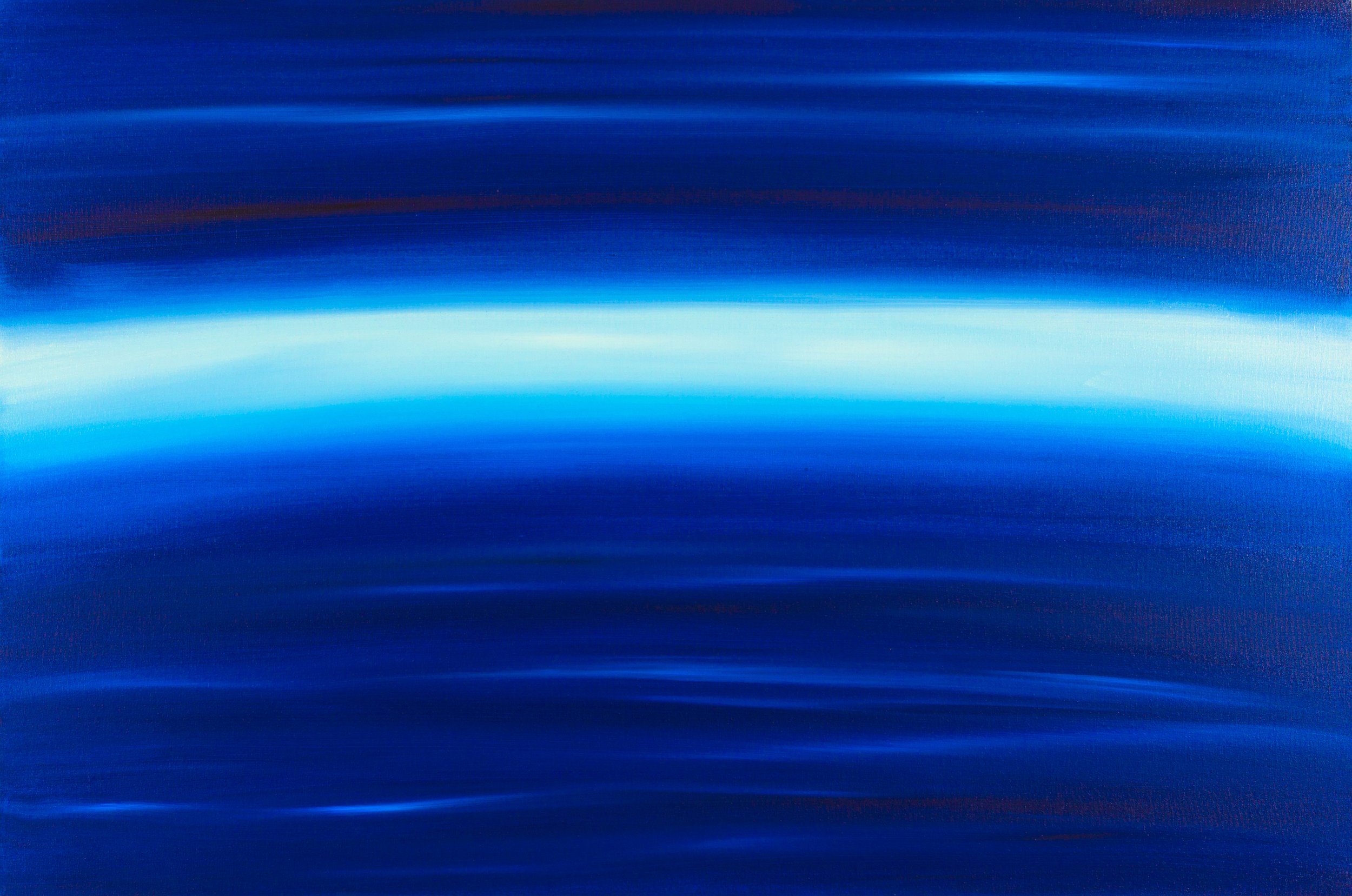
Jill Joy, Incipient Blue, oil on canvas, 40x60” - Available
Blue carries the frequency of truth. It is the color of depth — oceans, sky, the infinite. Psychologically, blue evokes stability, trust, and contemplation. It slows the nervous system and invites introspection. Kandinsky described blue as a movement toward the spiritual, a pull into the interior world. In spiritual traditions, blue is associated with purification, integrity, and alignment with purpose. It is the frequency of coherence, the voice that holds its shape in silence.
Indigo occupies the liminal zone — the seam between the visible and the known. Psychologically, it is tied to intuition, pattern recognition, and the ability to perceive underlying structures. It evokes mystery, depth, and the sense of something just beyond reach. In spiritual frameworks, indigo corresponds to inner vision, subtle perception, and the capacity to see through appearances. It is the frequency of thresholds, the space where insight begins to crystallize.

Jill Joy, Compassion in this World, oil on canvas, 48x60” - Available
Violet dissolves into transformation. It is the color of imagination, transcendence, and the merging of the material with the immaterial. Psychologically, violet evokes awe, wonder, and the willingness to release old forms. It is associated with creativity at its most expansive — the kind that breaks paradigms rather than refining them. In spiritual traditions, violet represents unity consciousness, liberation, and the dissolution of ego boundaries. It is the frequency of metamorphosis, the moment a structure becomes a possibility.
Taken together, these frequencies form a spectrum of human experience — from embodiment to transcendence, from instinct to insight, from survival to transformation. Color becomes a way of understanding the movement of consciousness itself. It is not merely aesthetic; it is structural, emotional, symbolic, and spiritual.
To engage with color is to engage with the psyche. It is to recognize that perception is not passive but participatory — that the world speaks to us in hues, and we respond with feeling, memory, and meaning. Color is one of the most immediate ways we experience the world, and one of the most profound ways the world experiences us.
#art #colortheory #abstractart #jilljoy