
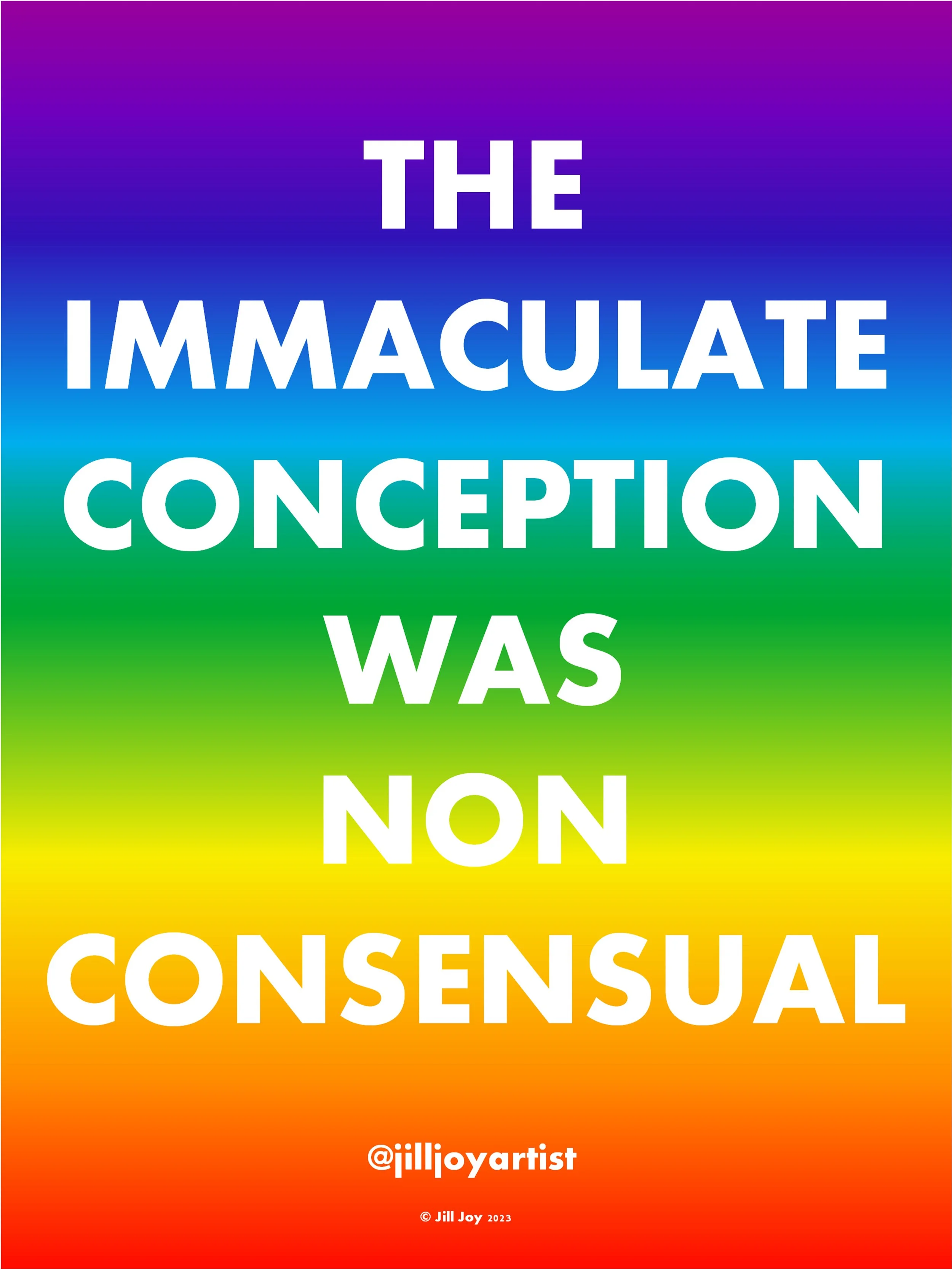
The story of the Immaculate Conception has long served as a foundational narrative in Christian tradition, shaping cultural ideals of femininity, purity, and reproductive purpose. When examined through feminist theory, however, the narrative becomes a site for interrogating power, agency, and the ideological structures that have historically governed women’s bodies. This essay approaches the claim that “the Immaculate Conception was non-consensual” not as a theological argument but as a cultural critique, tracing how feminist thought—from the emergence of radical feminism in the late 1960s to the rise of the #MeToo movement in the 2010s—offers tools for reinterpreting the story’s power dynamics..
Radical Feminism: Origins and Core Commitments
Radical feminism emerged during the second wave of feminism in the late 1960s and early 1970s, a period marked by intense political activism and a growing critique of the structural nature of women’s oppression. Unlike liberal feminism, which sought equality within existing systems, radical feminism argued that patriarchy was a deep-rooted social order that shaped every aspect of women’s lives—from sexuality and reproduction to labor, religion, and cultural myth. Its central claim was that women’s subordination was not incidental but systemic, maintained through institutions, narratives, and norms that naturalized male dominance.
Within this framework, control over women’s reproductive capacity was understood as a cornerstone of patriarchal power. Radical feminists such as Shulamith Firestone, Andrea Dworkin, and Catharine MacKinnon argued that myths, religious stories, and cultural narratives played a crucial role in legitimizing this control. These stories were not neutral; they were ideological tools that taught women to accept subordination as virtue.
Seen through this lens, the Immaculate Conception becomes a paradigmatic example of patriarchal mythmaking. The narrative elevates Mary precisely because she embodies the traits patriarchy prizes: purity, obedience, and self-sacrifice. Her reproductive labor is framed as divinely ordained, not self-directed. The absence of explicit consent is not a narrative oversight—it is integral to the myth’s function. Mary’s value lies in her compliance, her willingness to serve a purpose defined by a male (or divine-male) authority. Radical feminism would argue that this story encodes a model of womanhood in which agency is secondary to reproductive service, and in which women’s bodies are positioned as vessels for patriarchal ends.
From Radical Feminism to #MeToo: The Evolution of Consent Politics
While radical feminism provided the theoretical foundation for understanding structural power, the #MeToo movement—gaining widespread momentum around 2017 and reshaping public discourse by 2020—brought the politics of consent into mainstream consciousness. #MeToo emphasized the lived experiences of women navigating power imbalances in workplaces, institutions, and interpersonal relationships. It reframed consent not as a simple yes or no but as something that requires autonomy, safety, and freedom from coercion.
Where radical feminism focused on structural domination, #MeToo highlighted how those structures manifest in everyday interactions. It exposed how power differentials—whether between employer and employee, teacher and student, or celebrity and fan—can undermine the possibility of meaningful consent. The movement insisted that consent must be enthusiastic, informed, and freely given, and that any situation involving extreme power asymmetry raises ethical concerns.
Applying #MeToo’s framework to the Immaculate Conception intensifies the critique initiated by radical feminism. The narrative describes a divine being initiating a pregnancy with a human subject—a scenario defined by absolute power imbalance. Even if Mary verbally assents, #MeToo’s logic asks whether consent is conceptually possible when one party is omnipotent. The movement’s core insight—that power itself can invalidate the conditions necessary for consent—casts the story in a new light. It becomes emblematic of how patriarchal cultures have historically romanticized or sanctified dynamics that, under contemporary ethical scrutiny, raise profound questions about agency.
Convergence: What These Frameworks Reveal Together
When radical feminism and #MeToo are placed in dialogue, a shared critique emerges. Both frameworks highlight how the Immaculate Conception encodes a model of femininity in which women’s autonomy is constrained by expectations of purity, obedience, and reproductive service. Radical feminism identifies the narrative as part of a larger ideological system that naturalizes patriarchal control, while #MeToo exposes the ethical problems inherent in the story’s power dynamics.
Together, they reveal how foundational myths shape cultural expectations of women’s behavior and how those expectations persist across centuries. The claim that the Immaculate Conception was non-consensual is not a theological assertion but a feminist reading that exposes the narrative’s embedded power structures. It invites a broader conversation about how cultural stories normalize women’s lack of agency and how feminist critique can illuminate the ideological work those stories perform.
Conclusion
Reinterpreting the Immaculate Conception through the combined lenses of radical feminism and the #MeToo movement underscores the enduring influence of patriarchal narratives on contemporary understandings of gender, power, and consent. By situating the story within a historical continuum of feminist thought, we see how critiques of reproductive control, agency, and power imbalance have evolved—and how they continue to shape our engagement with cultural myths. This analysis is not an attack on faith but an invitation to examine how foundational stories operate ideologically, and how revisiting them through feminist frameworks can open space for more equitable cultural possibilities.
#feminism #theenlightenmentcampaign #jilljoy #contemporaryart